European Law and Human Rights in a Trinational Dialogue: 3 Questions for Andreas Müller
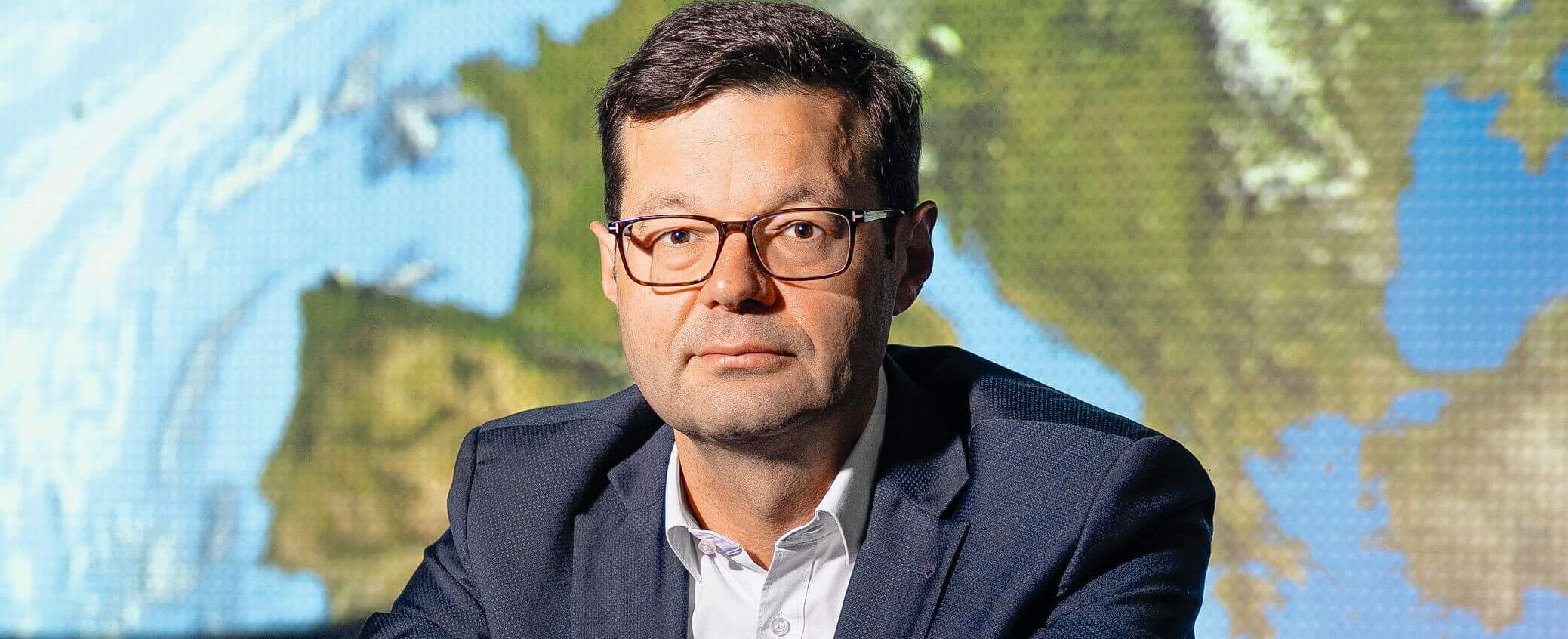
From Innsbruck via Strasbourg, Yale and The Hague to Basel: Andreas Müller is Professor of European and International Law and Human Rights at the University of Basel. At the Karlsruhe Institute of Technology (KIT), he speaks in the Jean Monnet Circle Seminar about human rights and the legal framework of the European Union in the areas of asylum and migration. Furthermore, together with colleagues from Freiburg and Strasbourg, he organises the trinational Eucor seminar on European fundamental rights protection. In this interview, he discusses his connection to the Upper Rhine region, the added value of cross-border exchange and current challenges for human rights in Europe.
You studied in Strasbourg, gained international experience and are now a professor in Basel. What brought you back to the Upper Rhine, and what makes this region special for you?
My connection to the region began during my Erasmus year in Strasbourg. I had previously studied in Innsbruck and have always been fascinated by the French language and culture. I chose Strasbourg not only for these reasons but also because of its special location: I was interested in the Franco-German history, the reconciliation and friendship between the two countries, and the European idea. For me, Strasbourg is almost a symbolic place for European law and international understanding. As the seat of the European Parliament and the European Court of Human Rights (ECHR), the city embodies this tradition in a particular way.
When I was later offered a professorship in Basel, the region was already familiar to me and I had fond memories of it. Basel is also a border city and opens up an interesting additional perspective on Europe: while European law holds a different status in Switzerland than in EU member states, there are nevertheless numerous touchpoints and intensive economic, cultural, scientific, as well as personal and familial connections. It is precisely this special constellation that makes the region so exciting for me.
Eucor connects universities in Germany, France and Switzerland. Together with colleagues from Freiburg and Strasbourg, you organise a trinational seminar on European fundamental rights protection. What makes the exchange between the three countries particularly valuable for the students?
The seminar has existed for over 20 years. The idea is to bring students from different universities and three countries together to discuss common key topics from the perspective of European fundamental rights protection. In recent years, these have included, for example, migration, religion, freedom of expression, digitalisation and climate protection.
What unites us is a common legal basis: the European Convention on Human Rights and the ECHR in Strasbourg, which is responsible for its interpretation. This is not an EU institution, but belongs to the Council of Europe – of which Switzerland is also a full member. As a result, the students possess a common legal language and categories that they recognise regardless of national borders during their discussions.
At the same time, differences become apparent. France and Germany are EU member states, whereas Switzerland is not. National legal systems and proposed solutions also differ. This allows students to compare directly how different countries deal with the same challenges and to learn from one another – both from successful approaches and from less successful solutions.
Beyond the academic exchange, the personal encounter is crucial. The discussions gain a special depth through these different perspectives. The seminar demonstrates how much common understanding can arise when students learn and discuss across national borders.
You research European and international law as well as human rights. Where do the greatest challenges currently lie for the protection of human rights in Europe?
I see a particular challenge in European asylum and migration law.
One must distinguish between two areas here: labour migration within the EU generally works well based on the free movement of people and is politically largely uncontested. In the Eucor region, this form of European integration is particularly concrete and experiential in everyday life: people live in one country, work or study in another, and move across borders as a matter of course. Cross-border encounter and cooperation are part of daily life for many.
The situation is different for people seeking protection from outside Europe. Flight and asylum have become some of the most important and controversial political issues in many European countries. Since responsibilities in the area of asylum are now largely at the European level, the EU is increasingly at the centre of the debate.
In recent years, European asylum rules have been comprehensively revised following years of discussion and dispute. The political orientation has become more restrictive, partly due to the increasing shift of responsibility to the external borders and beyond. From a human rights perspective, this is worrying: the legal protection status of people seeking refuge in Europe is increasingly being called into question.
The central question is what humanitarian responsibility the EU intends to take in the future. Even under difficult political conditions, the law must ensure the human rights foundations of Europe.
Event Information
On 4 December 2026, Prof. Dr Andreas Müller will speak at KIT as part of the Jean Monnet Circle Seminar on human rights and the legal framework of the European Union in the areas of asylum and migration.
Further information on the event: Jean Monnet Circle Seminar at KIT
Further information on Prof. Andreas Müller: University of Basel, Faculty of Law, Prof. Andreas Müller